
Master Java for AP Computer Science A with one-on-one lessons
One-on-one AP Computer Science A tutoring programme. In a free initial consultation we assess your level and agree the plan and the exact price together. Parents and students are both welcome to reach out.
What is the AP Computer Science A exam?
AP Computer Science A is a high-school course administered by the College Board, equivalent to a first-semester university programming course. It is based on the Java programming language and offers hands-on software training, from variables to object-oriented programming and from arrays to algorithms.
The exam has multiple-choice and free-response sections; in the free-response section students write Java code themselves, without a compiler. It is a solid start for students heading into software, engineering and computer science. A strong AP score can earn credit or exemption from an introductory programming course at many universities.
Why prepare for AP Computer Science A with Studrise?
Exam-focused expert tutors
Every lesson is taught by expert tutors who know the AP Computer Science A format inside out and focus on exam strategy.
A plan built around you
After your level assessment, we build a personal roadmap around your strengths and weak spots.
Flexible 1:1 schedule
Lessons run online and one-on-one on days and times that suit you — no clashes with school.
A clear start
It starts with a free initial consultation: level, plan and price are settled before the programme begins.
How it works
Free initial consultation
A short call and assessment to clarify your current level, your goal and your exam date.
Personal roadmap
We build a topic-by-topic weekly study plan and match you with the right tutor.
Reach your goal with 1:1 lessons
Start one-on-one lessons with your tutor and track progress with regular practice tests.
AP Computer Science A exam format
The AP Computer Science A exam has two sections and takes about 3 hours in total:
Section I: Multiple Choice
40 questions · 1 hour 30 minutes · 50% of the exam score
Section II: Free Response
4 questions · 1 hour 30 minutes · 50% of the exam score · writing Java code
Programming language
Java · digital in Bluebook since 2025; code is written without a compiler or autocomplete
Content coverage
Java basics, object-oriented programming, arrays and algorithms
AP Computer Science A topics
The topic areas on the exam and their weight. Lessons don't follow this order — we start from the area that will move your score the most.
Unit 1 — Using objects and methods
15–25%
- Variables, primitive types, integer division and modulo
- Creating objects with constructors, reference types
- String methods and immutability
- The Math class and random numbers
- Static and instance methods
Unit 2 — Selection and iteration
25–35% · the heaviest unit
- Boolean expressions, if–else, De Morgan's laws
- while and for loops, nested loops
- String traversal and algorithms
- Code tracing and loop counting
- Developing algorithms: sums, counts, max/min
Unit 3 — Class creation
10–18%
- Class design: fields, constructors, access modifiers
- Getters/setters, toString, this
- Inheritance, super, method overriding
- Polymorphism and abstract classes
- Encapsulation and data hiding
Unit 4 — Data collections
30–40%
- Arrays and for-each; array algorithms
- ArrayList methods and the removal trap
- 2D arrays: row–column traversal
- Searching (linear, binary) and sorting (selection, insertion, merge)
- Recursion and data ethics/privacy concepts
AP Computer Science A question types and strategy
Each question type has its own approach. In lessons we work on these strategies alongside the content.
Multiple choice (40 questions, 90 min)
Half the exam. A code segment is given: what is the output, which line is wrong, which expression is equivalent, how many times does the loop run. No calculator or computer; the Java Quick Reference sheet is provided.
About 2 minutes 15 seconds a question. Draw a variable table for loop questions; keep a list of trap patterns such as integer division, string indices and ArrayList removal. No penalty for wrong answers.
FRQs 1–2: methods, control structures and class (9 points each)
FRQ 1: writing methods of a given class with loops and conditions. FRQ 2: designing a class from scratch with fields, constructor, methods, sometimes inheritance.
First write as a comment what the method returns and which parameters it uses, then code. For the class question, the private-fields plus public-methods template is memorised; watch constructor parameter order. Partial credit exists, so never leave it blank.
FRQs 3–4: ArrayList and 2D array (9 points each)
FRQ 3: traversing an ArrayList, adding/removing, calling object methods. FRQ 4: row/column operations, neighbours and transformations on a 2D array.
The index-rollback (i--) pattern when removing from an ArrayList; arr[row][col] order and the arr.length versus arr[0].length distinction in 2D arrays. Twenty minutes per question; write the easy part (a) first, and in (b) and (c) you may call the method from the previous part.
Scoring and target scores
The AP Computer Science A exam is graded on a 1–5 scale, and a score of 3 or above is generally considered passing. The multiple-choice and free-response sections carry equal weight in the raw score. Many universities grant introductory credit for a 3, while selective computer science programs ask for a 4 or 5. On free-response questions, correct syntax and clearly shown logic directly affect the score.
AP Computer Science A suits high-school students with an aptitude for logical thinking who want a serious introduction to programming. AP exams are held every year in May, so preparation usually spans the school year. Settling Java syntax and object-oriented concepts takes regular coding practice, and getting used to the FRQ format early makes a difference in the final months.
What we cover in AP Computer Science A lessons
Java basics: variables, types and operators
Conditionals, loops and methods
Object-oriented programming and classes
Arrays, ArrayList and 2D arrays
Recursion and sorting/searching algorithms
FRQ coding and exam strategies
What sets the price of AP Computer Science A tutoring?
There is no single list price; the fee depends on the programme. You get a clear quote in the consultation — nothing is added later.
Lessons per week
One, two or three lessons a week — set by the time until the exam and the score gap.
Total duration and package
Lessons are priced as a package; longer programmes lower the per-lesson cost.
Scope
One section (say, Math only) or the whole exam? A narrower scope means a shorter programme.
Tutor and level
The tutor you're matched with and your starting level shape the plan, and therefore the fee.
Adding coaching?
Coaching and application counselling is an optional, separately priced programme.
Every lesson you pay for is 1:1
No crowded classroom, no idle hours. Keep that in mind when comparing with group-course prices.
In the free initial consultation we assess your level, draw up the plan and give you the exact price. No surprises.
AP Computer Science A: the new four-unit course and the exam
In 2025-26 the ten units were consolidated into four with the content unchanged; the exam format stayed the same.
AP Computer Science A teaches object-oriented programming in Java and is equivalent to a first-semester college programming course (CS1). From the 2025-26 school year the course was consolidated into four units: using objects and methods, selection and iteration, class creation, data collections. The content is largely unchanged; merge and recursive sorting and data-ethics concepts were added, and interfaces were removed.
The exam is 3 hours: Section I, 40 multiple choice (90 min, 50%), and Section II, 4 free-response questions (90 min, 50%): methods and control structures, class design, ArrayList, 2D array, nine points each. Code is written on paper; there is no compiler, and the Java Quick Reference sheet is provided.
In recent years 22–25% scored a 5 and 65% a 3 or above; a high share of 5s among APs because the cohort mostly has coding experience.
- Who should take it: grade 11–12 students aiming for computer science, software engineering, computer/electrical engineering, data science or mathematics. Selective US departments expect CS A alongside Calculus BC.
- Prerequisite: algebra and logic; prior Java is not required, but loop and list experience in any language shortens the preparation.
- Credit: most US universities grant CS1 credit for a 4–5; in the UK it is treated as close to A-Level Computer Science. It is a strong signal for technical universities in the Netherlands and Germany.
For the conceptual introductory course see AP CS Principles; for the comparison see the AP Computer Science page.
AP CS A study plan (September to May)
Four units in four blocks; one FRQ a week from October, on paper from March.
- September–October: Unit 1. Development-environment set-up, Java syntax, primitive types and integer-division traps, String and Math methods, creating objects. A small program every lesson.
- November–December: Unit 2. Boolean logic, if–else, loops, string algorithms; the variable-table habit for code tracing. First FRQ-1-type questions.
- January: Unit 3. Class design, constructors, inheritance and polymorphism; the FRQ 2 template (private fields, public methods, the super call).
- February–March: Unit 4. Arrays, ArrayList and the removal trap, 2D arrays, searching and sorting, recursion. FRQ 3 and 4 templates; from March every FRQ is written on paper.
- April–May: mocks. Three full mocks (3 hours), all four FRQs graded with the official rubric, a list of multiple-choice trap patterns, learning the Java Quick Reference.
For an inexperienced student, eight months at two lessons a week plus 3–4 hours of coding practice; for a student with Python experience, a six-month programme from November is enough. Homework means writing real code; student code is debugged together in lessons.
Round out your AP Computer Science A prep with coaching
Tutoring teaches the material; coaching manages the process. Your Studrise coach brings your study routine, goals and application timeline into one plan alongside your AP Computer Science A lessons — so what you learn in class turns into results.
Weekly plan & check-ins
A study plan with regular progress check-ins.
Data-driven strategy
Targets and plans updated from practice-test results.
Motivation & test anxiety
Support with time management, motivation and exam nerves.
Aligned with applications
Planning built around your university and program goals.
ADD-ON PROGRAMME
How do I get started?
Coaching is a separately priced programme alongside your lessons. In the initial consultation we agree its scope and price and build a coaching plan that fits around your lesson schedule.
Initial consultation is free
Our tutors
SAT, IELTS, AP, IB and more — you'll work with experienced, exam-focused tutors in every subject.
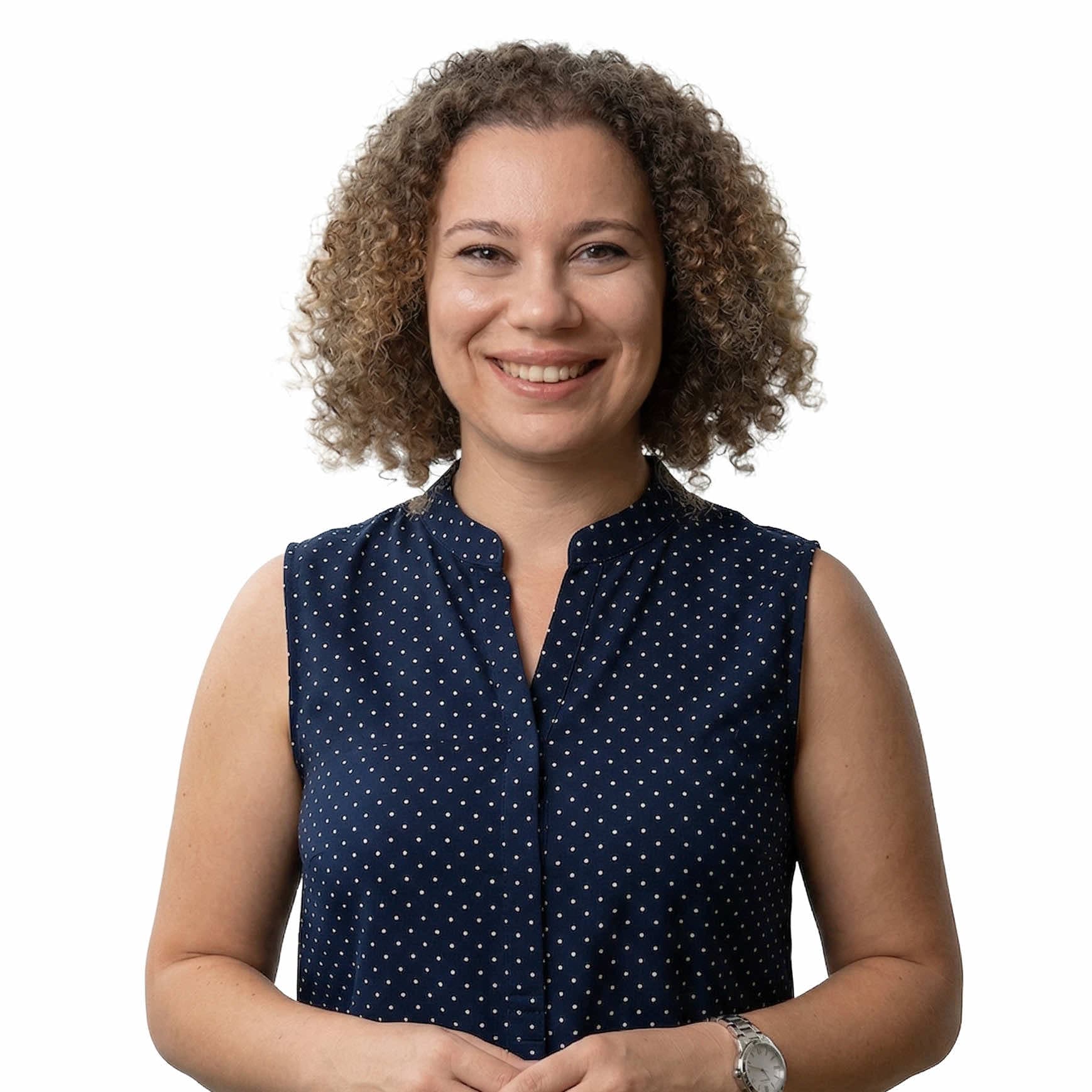
Burçak Gökmen
Biology Teacher
20+ years of experience

Ela Pehlivanoğlu
Chemistry Teacher
10+ years of experience

Gözde Top
History Teacher
6+ years of experience

Lara Deniz Alper
Math & Economics Teacher
7+ years of experience

Şule Çağlın
Physics Teacher
7+ years of experience
Frequently asked questions
Start working toward your AP Computer Science A goal today
Fill in the form; in a free initial consultation we settle your level, programme and exact price together. No crowded classroom, no idle hours: every lesson you pay for is one-on-one.