
Work toward studying medicine in Italy with 1:1 IMAT tutoring
One-on-one IMAT tutoring programme. In a free initial consultation we assess your level and agree the plan and the exact price together. Parents and students are both welcome to reach out.
What is the IMAT exam?
The IMAT (International Medical Admissions Test) is a standardised exam used by universities in Italy for admission to English-taught undergraduate medicine and surgery programs. The same exam is sat by both international and Italian students, and the result forms the national ranking on which places are allocated.
The exam consists of multiple-choice questions and covers four main areas: reading skills and general knowledge, logical reasoning, biology, and chemistry together with physics and mathematics. The science-heavy sections form the core of the test. Because places on medical programs are competitive, a high IMAT score plays a decisive role in the ranking.
Why prepare for IMAT with Studrise?
Exam-focused expert tutors
Every lesson is taught by expert tutors who know the IMAT format inside out and focus on exam strategy.
A plan built around you
After your level assessment, we build a personal roadmap around your strengths and weak spots.
Flexible 1:1 schedule
Lessons run online and one-on-one on days and times that suit you — no clashes with school.
A clear start
It starts with a free initial consultation: level, plan and price are settled before the programme begins.
How it works
Free initial consultation
A short call and assessment to clarify your current level, your goal and your exam date.
Personal roadmap
We build a topic-by-topic weekly study plan and match you with the right tutor.
Reach your goal with 1:1 lessons
Start one-on-one lessons with your tutor and track progress with regular practice tests.
IMAT exam format
The IMAT is a single-session exam made up of multiple-choice questions:
Reading skills and general knowledge
Text comprehension and general-knowledge questions
Logical reasoning
Problem-solving and critical-reasoning questions
Biology and chemistry
Form the science-heavy core of the exam
Physics and mathematics
Quantitative and science-based question types
Overall structure
60 multiple-choice questions · 100 minutes
IMAT topics
The topic areas on the exam and their weight. Lessons don't follow this order — we start from the area that will move your score the most.
Biology
23 questions · 38% of the test
- Cell biology: organelles, membrane transport, the cell cycle
- Genetics: Mendel, inheritance patterns, DNA–RNA–protein
- Human anatomy and physiology: circulatory, respiratory, nervous, excretory
- Bioenergetics: respiration, photosynthesis, enzymes
- Evolution, ecology and classification
Chemistry
15 questions · 25% of the test
- Atomic structure, the periodic table and bonding
- The mole, stoichiometry and solutions
- Acids and bases, pH and buffers
- Redox, electrochemistry and reaction rates
- Organic chemistry: functional groups, isomerism, basic reactions
Mathematics and physics
13 questions · 22% of the test
- Algebra, functions, logarithms and basic trigonometry
- Foundations of probability and statistics
- Kinematics, Newton's laws, work and energy
- Fluids, heat and basic thermodynamics
- Electricity: Coulomb's law, circuits, Ohm's law
Reading, general knowledge and logic
4 + 5 questions · 15% of the test
- Inference and main idea from a short text
- Logical sequences and verbal puzzles
- Syllogisms and conditional statements
- Numerical reasoning and problem solving
- General knowledge of current science and society
IMAT question types and strategy
Each question type has its own approach. In lessons we work on these strategies alongside the content.
Knowledge questions (biology, chemistry)
Five options, one correct answer. The syllabus is school level but broad; questions test a concept directly or through a short application.
There is negative marking (−0.4 per wrong answer): leave a question blank if you cannot narrow it to two options. Answer the sure ones in a first pass and the uncertain ones in a second; guessing only pays when two options remain.
Calculation questions (chemistry, physics, maths)
No calculator. Stoichiometry, pH, kinematics and circuit questions take a few steps; options usually differ by magnitude.
Carry units through the working and eliminate options by magnitude at the end. Memorise common constants and log values (log 2, log 3); it saves time on the day.
Logic and reading questions
Nine questions in total; a short text or a puzzle. Low weight in the score but a high time trap.
Leave these for the end and spend no more than ten minutes on them in total. If a puzzle shows no way through in two minutes, leave it blank; a biology question earns the same mark more safely.
Scoring and target scores
In the IMAT a correct answer earns points, a wrong answer leads to a small deduction, and an unanswered question does not affect the score — so guessing on uncertain questions should be done carefully. Results are used to build a national ranking, and places are allocated according to that ranking. A strong score is therefore measured by position relative to other candidates rather than by an absolute threshold; the aim is to rank near the top.
The IMAT suits final-year school students and graduates who want to study medicine in English in Italy and is usually held once a year, in early autumn. Because the exam is science-heavy, most students need a planned preparation period of several months covering biology, chemistry and physics. Starting early leaves more room to close topic gaps and sit practice tests.
What we cover in IMAT lessons
Logical reasoning and general knowledge
Biology: cells, genetics and physiology
Chemistry: general and organic chemistry
Physics and mathematics question types
Solving speed and elimination strategies
Full mock exams with mistake analysis
What sets the price of IMAT tutoring?
There is no single list price; the fee depends on the programme. You get a clear quote in the consultation — nothing is added later.
Lessons per week
One, two or three lessons a week — set by the time until the exam and the score gap.
Total duration and package
Lessons are priced as a package; longer programmes lower the per-lesson cost.
Scope
One section (say, Math only) or the whole exam? A narrower scope means a shorter programme.
Tutor and level
The tutor you're matched with and your starting level shape the plan, and therefore the fee.
Adding coaching?
Coaching and application counselling is an optional, separately priced programme.
Every lesson you pay for is 1:1
No crowded classroom, no idle hours. Keep that in mind when comparing with group-course prices.
In the free initial consultation we assess your level, draw up the plan and give you the exact price. No surprises.
What is the IMAT and how is it scored?
One national test and ranking for the English-taught medicine and dentistry programmes at Italy's public universities.
The IMAT (International Medical Admissions Test) is the entrance exam for the English-taught medicine and dentistry degrees at Italy's public universities. It is held on a single day at the same time in every centre; the 2026 test is on 30 September 2026. Applications are made over the summer on the Italian Ministry's (MUR) Universitaly portal, where you also choose your test centre (including centres abroad, Turkey among them) and your ranked list of universities.
| Area | Questions |
|---|---|
| Reading skills and general knowledge | 4 |
| Logical reasoning and problem solving | 5 |
| Biology | 23 |
| Chemistry | 15 |
| Mathematics and physics | 13 |
60 questions in 100 minutes. Scoring: +1.5 for a correct answer, −0.4 for a wrong one, 0 for a blank; the maximum is 90. Results come out in October and candidates are placed in a national ranking according to their university preferences; places are set separately for EU and non-EU applicants. Turkish students compete in the non-EU quota, which is small, and competition at popular schools such as Pavia, Milan, Bologna, Padua and Rome is high. Ranking rounds (scorrimento) continue from October to December, so a candidate without a place in the first round can still be admitted later. For living costs, housing and the visa process in Italy see our Italy consultancy page.
How to prepare for the IMAT: a 6–9 month plan
A broad science syllabus and negative marking: the plan builds topic coverage and question-selection discipline together.
- Diagnosis (first two weeks). A timed past paper; the right/wrong/blank split is mapped by area. For students from the Turkish curriculum the usual gaps are English biology terminology and organic chemistry.
- Science foundation (months 1–4). Two or three 1-on-1 lessons a week: biology every week, chemistry and physics-maths alternating. Every topic is taught with English terminology and ends with 15–20 IMAT-style questions. Outside lessons, 1–1.5 hours a day of revision and questions.
- Question-selection discipline (from month 3). Timed mixed sets train the "leave it blank" threshold: a question that does not narrow to two options stays blank. Net score (1.5·correct − 0.4·wrong) is tracked per set; the target is fewer wrong answers than a quarter of the correct ones.
- Full mocks (months 5–6). A 100-minute mock every two weeks, then only the wrong and blank questions are reworked. The fixed ten-minute budget for logic and reading questions is rehearsed.
- Final month. Weekly mocks, formula and constant cards, test-centre and ID checks; the Universitaly preference list is reviewed with the consultant.
Six months is enough for a grade-12 student with a strong science base; nine months is realistic for verbal-track or gap-year students. With the test at the end of September, starting between January and March is ideal.
Round out your IMAT prep with coaching
Tutoring teaches the material; coaching manages the process. Your Studrise coach brings your study routine, goals and application timeline into one plan alongside your IMAT lessons — so what you learn in class turns into results.
Weekly plan & check-ins
A study plan with regular progress check-ins.
Data-driven strategy
Targets and plans updated from practice-test results.
Motivation & test anxiety
Support with time management, motivation and exam nerves.
Aligned with applications
Planning built around your university and program goals.
ADD-ON PROGRAMME
How do I get started?
Coaching is a separately priced programme alongside your lessons. In the initial consultation we agree its scope and price and build a coaching plan that fits around your lesson schedule.
Initial consultation is free
Our tutors
SAT, IELTS, AP, IB and more — you'll work with experienced, exam-focused tutors in every subject.

Addison Bunch
English Teacher
10+ years of experience

Burçak Gökmen
Biology Teacher
20+ years of experience

Buğra Gökmen
Computer Science Teacher
7+ years of experience

Ela Pehlivanoğlu
Chemistry Teacher
10+ years of experience

Gözde Top
History Teacher
6+ years of experience

Lara Deniz Alper
Math & Economics Teacher
7+ years of experience

Mesut Mızrak
Physics Teacher
26+ years of experience
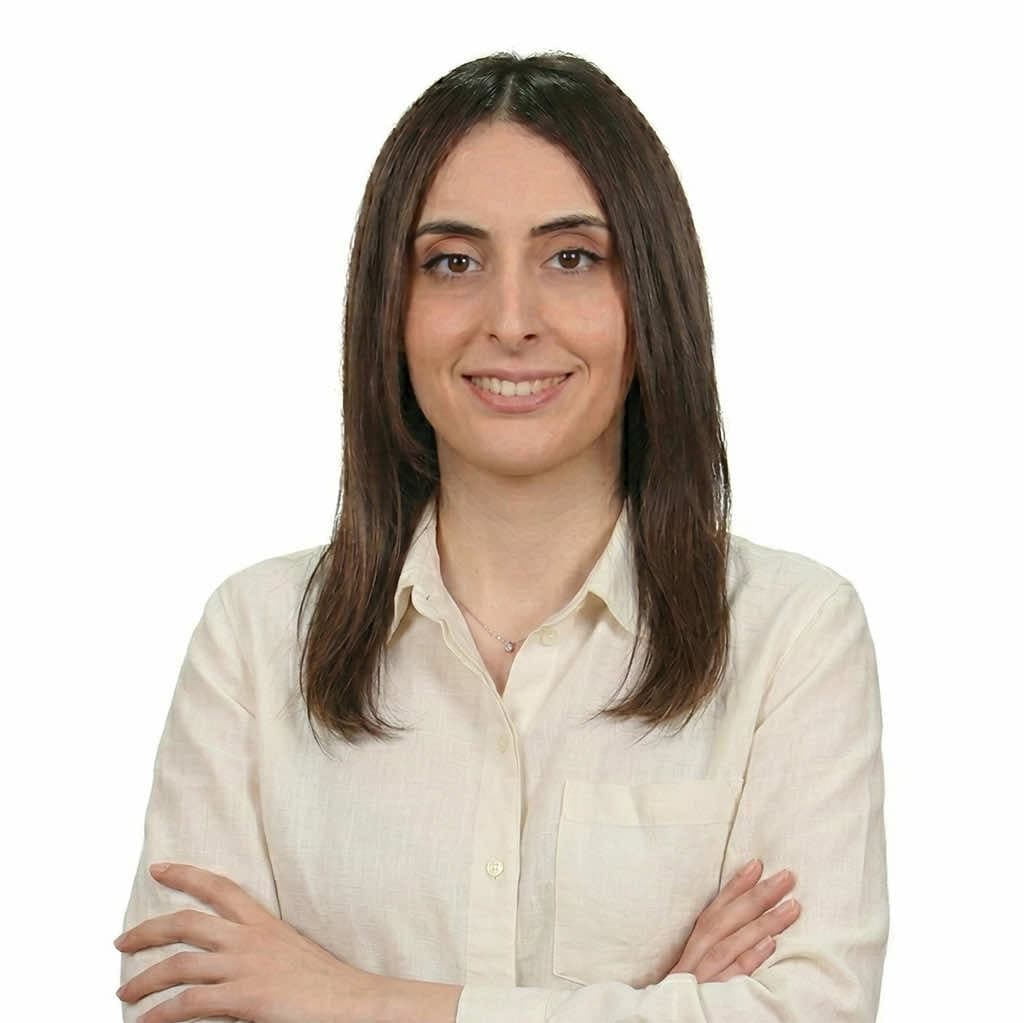
Şule Çağlın
Physics Teacher
7+ years of experience
Frequently asked questions
Start working toward your IMAT goal today
Fill in the form; in a free initial consultation we settle your level, programme and exact price together. No crowded classroom, no idle hours: every lesson you pay for is one-on-one.