
Reach your target grade in IB Math SL/HL with 1:1 tutoring
One-on-one IB Mathematics (SL / HL) tutoring programme. In a free initial consultation we assess your level and agree the plan and the exact price together. Parents and students are both welcome to reach out.
What is the IB Mathematics (SL / HL) exam?
IB Mathematics is the mathematics subject within the International Baccalaureate Diploma Programme's six subject groups and is offered as two separate courses: Analysis & Approaches and Applications & Interpretation. Each course can be taken at Standard Level (SL) or Higher Level (HL). SL covers a broad range of concepts at a foundational depth, while HL extends the same topics with greater depth, more abstraction and additional content.
Every diploma candidate must take a mathematics course; the choice depends on the student's interests and intended university degree. Engineering, economics and quantitative programs often expect HL, particularly the Analysis & Approaches course. A strong mathematics grade is a concrete signal of quantitative ability on university applications.
Why prepare for IB Mathematics (SL / HL) with Studrise?
Exam-focused expert tutors
Every lesson is taught by expert tutors who know the IB Mathematics (SL / HL) format inside out and focus on exam strategy.
A plan built around you
After your level assessment, we build a personal roadmap around your strengths and weak spots.
Flexible 1:1 schedule
Lessons run online and one-on-one on days and times that suit you — no clashes with school.
A clear start
It starts with a free initial consultation: level, plan and price are settled before the programme begins.
How it works
Free initial consultation
A short call and assessment to clarify your current level, your goal and your exam date.
Personal roadmap
We build a topic-by-topic weekly study plan and match you with the right tutor.
Reach your goal with 1:1 lessons
Start one-on-one lessons with your tutor and track progress with regular practice tests.
IB Mathematics (SL / HL) exam format
IB Mathematics assessment is made up of external exam papers and an Internal Assessment:
Paper 1
Short and extended-response questions · different length and weighting at SL and HL
Paper 2
Questions requiring a calculator · different length and weighting at SL and HL
Paper 3
HL only · extended problem-solving questions
Internal Assessment
Individual mathematical exploration · about 20% of the total grade
IB Mathematics (SL / HL) topics
The topic areas on the exam and their weight. Lessons don't follow this order — we start from the area that will move your score the most.
Number and algebra · Functions
Topics 1–2 · shared core of both courses
- Sequences and series, exponentials and logarithms, the binomial theorem
- AA HL: complex numbers, induction, proof
- AI: financial mathematics, approximation and error
- Function transformations, inverses and composites, polynomials
- AA: rational functions; AI: modelling functions
Geometry and trigonometry
Topic 3
- Triangle trigonometry, sine and cosine rules, radians
- Trigonometric functions and equations
- AA HL: identities, vectors, lines and planes in space
- AI: Voronoi diagrams, 3D geometry
- AI HL: matrices and transformations, graph theory
Statistics and probability
Topic 4 · heaviest in AI
- Descriptive statistics, correlation and regression
- Probability rules, conditional probability
- Binomial and normal distributions
- AI: chi-square, t-tests, Spearman; AI HL: Poisson, Markov chains
- AA HL: continuous distributions and transformations
Calculus
Topic 5 · heaviest in AA
- Limits, derivative rules, tangents and normals
- Optimisation, kinematics, graph analysis
- Integration, areas and volumes
- AA HL: integration by parts, Maclaurin series, differential equations, L'Hôpital
- AI HL: Euler's method, coupled differential equations, phase portraits
IB Mathematics (SL / HL) question types and strategy
Each question type has its own approach. In lessons we work on these strategies alongside the content.
Paper 1 — no calculator in AA, calculator in AI
SL 90 min / 80 marks, HL 120 min / 110 marks. Section A short questions, Section B long structured questions. No calculator in AA Paper 1; every AI paper allows a graphing calculator.
In AA Paper 1, algebraic simplification and exact values (fractions, surds, π); in AI, write calculator readings to three significant figures and show the step. About a minute per mark.
Paper 2 — with calculator
Same length and marks; questions that need the graphing calculator: equation solving, statistical tests, numerical integration, modelling.
Show the set-up before the calculator output ("solved f(x)=0 using the GDC"); method marks come from it. Know the formula booklet page by page before the exam.
Paper 3 (HL) and the Exploration (IA)
Paper 3 is HL only: 60 min, 55 marks, two extended problem-solving questions exploring a new context. The IA: a 12–20 page mathematical exploration on a topic the student chooses, five criteria, 20 marks, 20% of the grade.
In Paper 3 read the whole question first; sub-parts build on each other and the pattern in early parts hints at later ones. In the IA pair personal interest with real mathematics (proof, modelling, a statistical test); finish the draft by April of year 1.
Scoring and target scores
IB Mathematics, like every IB subject, is graded on a 1–7 scale, where 7 is the highest. The subject grade combines the external exam papers with the Internal Assessment. Grades from six subjects, plus extra points from Theory of Knowledge and the Extended Essay, make up the total diploma score out of 45. Broadly, 6 and 7 are considered strong, and selective university programs often expect a 6 or above in HL mathematics.
IB Mathematics is taught across the two-year Diploma Programme, and exams are held twice a year, in the May and November sessions. Because preparation spans two years, the most effective approach is steady, continuous work; topics build on earlier material. One-on-one lessons are especially valuable for choosing between SL and HL, closing weak topics and planning the Internal Assessment step by step. In the final stretch before the exam, practice with past papers raises the score noticeably.
What we cover in IB Mathematics (SL / HL) lessons
Number, algebra and functions
Geometry and trigonometry
Statistics and probability
Calculus: differentiation and integration
Internal Assessment (IA) guidance
Paper 1, 2 and 3 exam strategies
What sets the price of IB Mathematics (SL / HL) tutoring?
There is no single list price; the fee depends on the programme. You get a clear quote in the consultation — nothing is added later.
Lessons per week
One, two or three lessons a week — set by the time until the exam and the score gap.
Total duration and package
Lessons are priced as a package; longer programmes lower the per-lesson cost.
Scope
One section (say, Math only) or the whole exam? A narrower scope means a shorter programme.
Tutor and level
The tutor you're matched with and your starting level shape the plan, and therefore the fee.
Adding coaching?
Coaching and application counselling is an optional, separately priced programme.
Every lesson you pay for is 1:1
No crowded classroom, no idle hours. Keep that in mind when comparing with group-course prices.
In the free initial consultation we assess your level, draw up the plan and give you the exact price. No surprises.
IB Maths AA or AI? SL or HL?
Four combinations, four different university doors; the choice is made at the end of grade 10 and is hard to change.
IB Mathematics has been two courses since 2021. Analysis & Approaches (AA) is weighted towards algebra, proof and calculus and includes a non-calculator Paper 1; Applications & Interpretation (AI) is weighted towards modelling, statistics and technology, with a calculator in every paper. Both are offered at SL (150 hours) and HL (240 hours).
| AA SL | AA HL | AI SL | AI HL | |
|---|---|---|---|---|
| Who it suits | Sciences, economics, architecture | Engineering, physics, maths, computing, econometrics | Social sciences, business, design, arts | Business, psychology, biology, data-driven social science |
| Papers | P1 (no calc) + P2 | P1 (no calc) + P2 + P3 | P1 + P2 (calc) | P1 + P2 + P3 (calc) |
| Exam time | 3 h | 5 h | 3 h | 5 h |
| Share of 7s (recent) | ≈ 8–10% | ≈ 10–14% | ≈ 6–8% | ≈ 8–12% |
- Engineering, physics, maths, computer science, econometrics: UK universities such as Imperial, Cambridge and UCL require AA HL; AI HL is not accepted for most engineering programmes. Selective US departments prefer AA HL.
- Economics, business, medicine: most programmes accept AA SL or AI HL; LSE economics expects AA HL. For medicine the type of maths is usually not decisive.
- Social sciences, law, arts: AI SL is sufficient and gives the best chance of a top grade.
Students from the Turkish curriculum are strong in algebra and calculus, which AA rewards. Because statistics and modelling language is weak in the school syllabus, the first month of AI is spent entirely on it. The programme helps choose the course against the maths requirements of the target universities; for the other IB subjects see the IB courses page.
A two-year IB Maths support plan
In step with school: content and the IA in year 1, past papers in year 2.
- Year 1, September–January: Topics 1–3 (algebra, functions, geometry–trigonometry) in the school's order; one or two lessons a week, one past Section A question per lesson. Graphing-calculator menus (a priority for AI) are taught in the first month.
- Year 1, February–June: start of Topics 4–5 (statistics, calculus); IA topic chosen in February, draft in April, finished with feedback by June. Completing the IA in year 1 leaves all of year 2 for the exams.
- Year 2, September–December: HL additional content (AA: complex numbers, Maclaurin, differential equations; AI: matrices, Markov, Euler), Paper 3 rehearsals. Two full sets before the school mocks.
- Year 2, January–April: one timed paper a week (P1, P2, and P3 for HL in rotation); self-assessment with the markscheme; error log. The formula booklet is learned page by page.
- May: exam-week routine; on the days between papers, only error-log review.
If support is wanted only before the exams, a four-month past-paper programme from January (two lessons a week) is a realistic route to lifting the grade by one band.
Round out your IB Mathematics (SL / HL) prep with coaching
Tutoring teaches the material; coaching manages the process. Your Studrise coach brings your study routine, goals and application timeline into one plan alongside your IB Mathematics (SL / HL) lessons — so what you learn in class turns into results.
Weekly plan & check-ins
A study plan with regular progress check-ins.
Data-driven strategy
Targets and plans updated from practice-test results.
Motivation & test anxiety
Support with time management, motivation and exam nerves.
Aligned with applications
Planning built around your university and program goals.
ADD-ON PROGRAMME
How do I get started?
Coaching is a separately priced programme alongside your lessons. In the initial consultation we agree its scope and price and build a coaching plan that fits around your lesson schedule.
Initial consultation is free
Our tutors
SAT, IELTS, AP, IB and more — you'll work with experienced, exam-focused tutors in every subject.

Addison Bunch
English Teacher
10+ years of experience
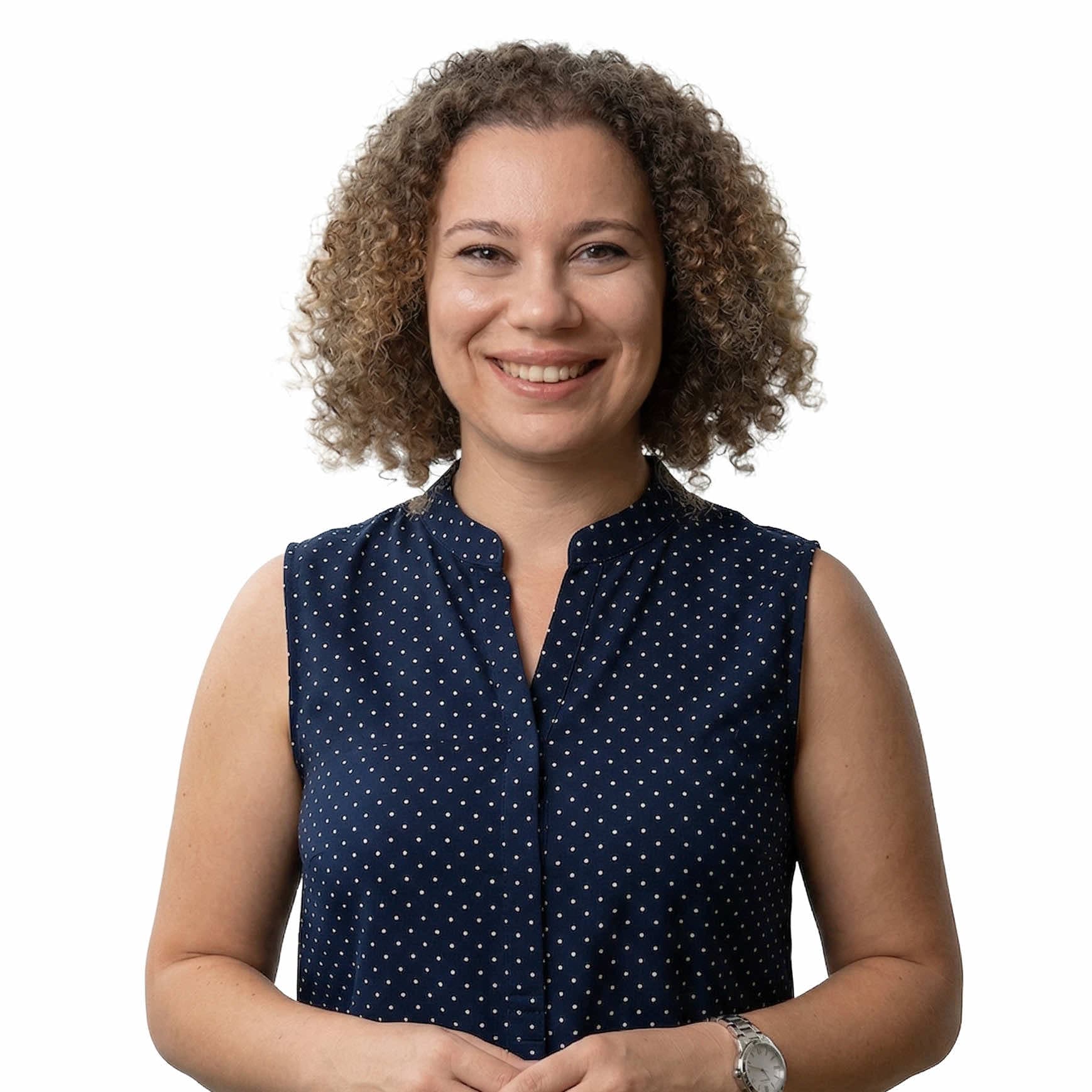
Burçak Gökmen
Biology Teacher
20+ years of experience

Buğra Gökmen
Computer Science Teacher
7+ years of experience

Ela Pehlivanoğlu
Chemistry Teacher
10+ years of experience

Gözde Top
History Teacher
6+ years of experience

Lara Deniz Alper
Math & Economics Teacher
7+ years of experience
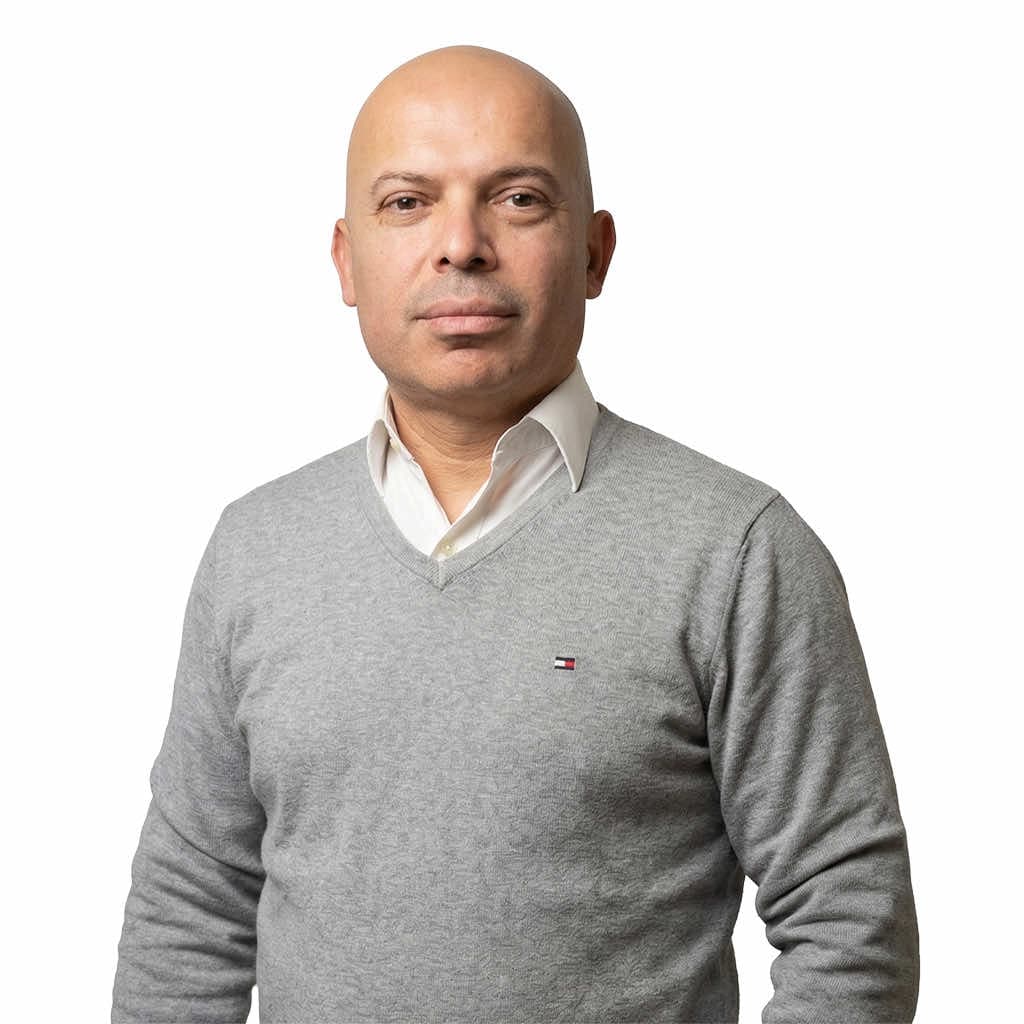
Mesut Mızrak
Physics Teacher
26+ years of experience

Şule Çağlın
Physics Teacher
7+ years of experience
Frequently asked questions
Start working toward your IB Mathematics (SL / HL) goal today
Fill in the form; in a free initial consultation we settle your level, programme and exact price together. No crowded classroom, no idle hours: every lesson you pay for is one-on-one.